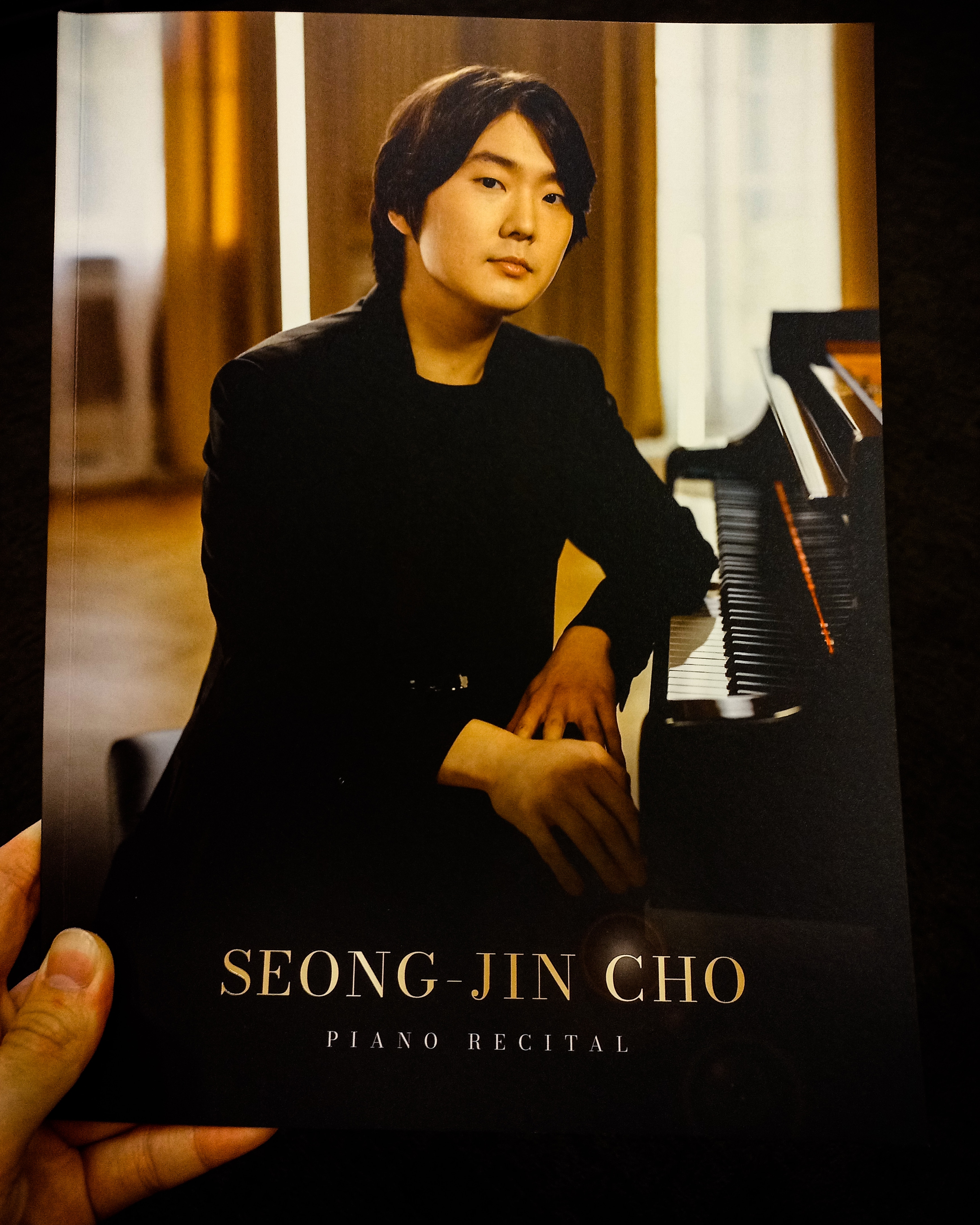
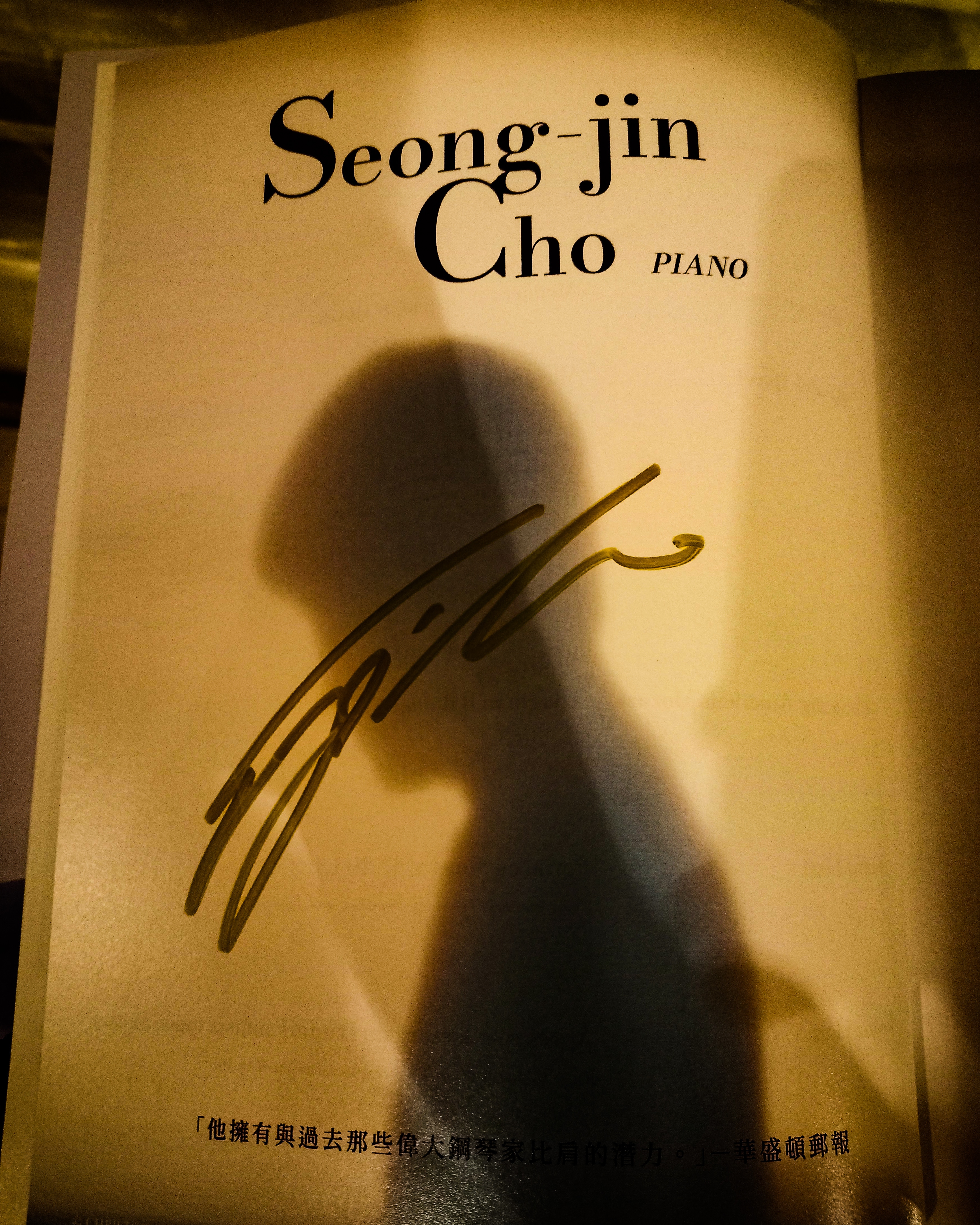
Enquête sur la Divine: Seong-Jin Cho Recital in Taipei
25 November 2023
Programme
(Organisé dans le [temps] et [lieu])
1. Joseph Haydn: Piano Sonata in e minor, Hob. XVI/34 [10:21]
2. Maurice Ravel: Minuet sur le nom de Haydn, M.58 [17:43]
3. Maurice Ravel - Miroirs, M.43
- Noctuelles [21:39]
- Oiseaux tristes [23:57]
- Une barque sur l'océan [01:05]
- Alborada del gracioso [07:44]
- La valleé des cloches [08:16]
Intermission
4. Wolfgang Amadeus Mozart: Adagio in b minor, K. 540 [debout près de l'abîme]
5. Franz Liszt: Petraca Sonette 47, 104, 123 (from L'années de Pèlerinage, Deuxième Année : "Italie", S.161) [avec du Moscato]
6. Franz Liszt: Après une lecture du Dante: Fantasia quasi Sonata (from L'années de Pèlerinage, Deuxième Année : "Italie", S.161) [la croyance en Dieu]
Encores.
E1. Franz Liszt: Consolation No. 3 in d-flat minor, S.172
E2. Frédéric Chopin: Waltz No. 2 in A-flat Major, Op.34 No.1
E3. Frédéric Chopin: Scherzo No. 2 in b-flat minor, Op.31
A recital stems from selecting programs, which paves the foundation of quality. Seong-Jin foreshadows his ambition from the very beginning.
The journey originates from Haydn's piano sonata and Ravel's response. The first day passes transiently from Baroque the forenoon to Impressionism the twilight. Seong-Jin consciously retains himself whilst releasing exactly sufficient amount of energy in the dialogue. He vividly portrayed the transition from kaleidoscope to grayscaled aroma.
The first half of this recital culminates at "Miroirs". Previously, I listened to Bertrand Chamayou's album (2015) several times, and Seong-Jin's "Debussy" (2017) as well. Hence I am extremely curious about the chemical reaction when Seong-Jin encounters Ravel. Undoubtedly, Seong-Jin's technique is impeccable to harness such intricate threads composed by Ravel without losing the panaromatic sense of direction. "IV. Alborada del gracioso" intoxicates me totally. I cannot help but recalling the clown appearing in "The Dark Knight" (2008). Seong-Jin expresses it deliberately in a floundering way, austere whilst sincere, attempting to discuss the meaning of Dasein.
After the intermission, Seong-Jin handpicks Mozart K.540 as his exodium to purgatorium. Much to my surprise, this is the only piece that Mozart marked tonality on his table of content. We are transcended to another dimension of space thereupon.
Liszt's l'année de pèlerinage has stayed in my favorite set of piano works ever since our first encounter. The romantic notes just springs from Seong-Jin the poet's fingers spontaneously. As though a glass of chartueuse cider in an airport with sunlight penetrating the window; as though an author settled in Golden Mandheling, reminiscient of fleeting moments of life. "I rejoiced in my progress, mourned my weaknesses, and commiserated the universal instability of human conduct."
After lingering around this mortal world, one must confront the ultimate harbor: decease. The departure and destination of everything has been two central pillars of philosophy. Seong-Jin makes his inquiry to afterlife flagrantly. Consecutive ferocious beatings keep scrutinizing the boundary between divinity and humanity. Although I could tell that Seong-Jin is still crystalizing his understanding and interpretation of this masterpiece, I am still intrigued in his outstanding performance today, and transformed into a parallel domain. Seong-Jin's capability of engraving exquisite landscapes is remarkable.
The inspiration of choosing "Consolation, No.3" as encore is brilliant. Just like the scene transits to another scene: living ones came mourning at the funeral, which draws to a sound end.